World leaders, businesses and civil society are gathering in Turkey for COP31 to discuss how to accelerate climate action and advance the implementation of the Paris Agreement. Discussions are focused on strengthening climate action, scaling investment in the transition, and creating the conditions needed for meaningful and lasting emissions reductions.
"COP31 is an important reminder that ambition alone is not enough. To translate climate commitments into real-world outcomes, policymakers must provide clear, stable and predictable frameworks, while all stakeholders remain committed to agreed climate targets. Only through long-term consistency and sustained action can we unlock the investments and innovation needed to achieve our shared climate goals", says, Jia Finnman, Sustainability Manager at Loomis.
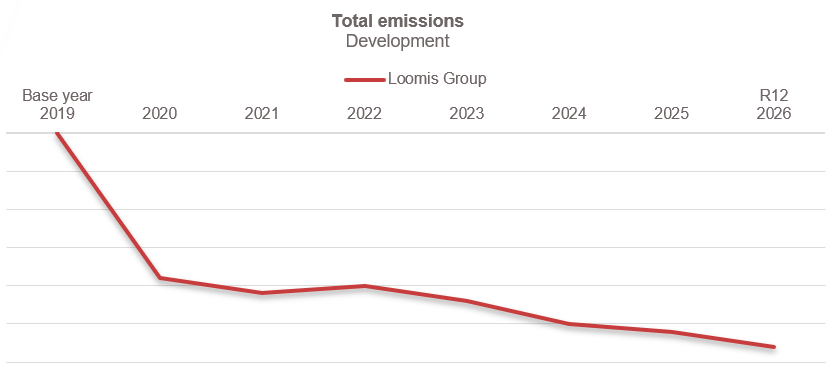
Since the beginning of the current strategic period, 2024, Loomis has worked methodically to reduce its climate emissions. This long-term effort has delivered clear results. For the latest twelve months ending September 30, emissions in Scope 1 and 2 have decreased by nearly 28 percent compared to the base year 2019.
"We have a responsibility to run our global operations with as small a climate footprint as possible. By setting strategic targets and committing to the SBTi, we are paving the way forward", says Jia Finnman.
Loomis carries out thousands of transport operations every day. Emissions from the vehicle fleet account for a significant share, representing well over half of the company’s total emissions.
"Loomis operates in over 25 countries and plays a vital role in society. We operate in an environment with numerous security considerations that must always come first. Consequently, transitioning from one alternative to another is almost always a complex process requiring rigorously thorough deliberations", says Jia Finnman
To reduce transport emissions, the company works actively with route optimization to minimize mileage, combined with a transition in fuel types. This includes increasing the use of the biofuel HVO, which grew by more than 60 percent during the recent period and now accounts for nearly 8 percent of total fuel consumption.
"In our emissions reduction efforts, reducing the climate impact from our transportation is the highest priority. We achieve this by electrifying our vehicle fleet wherever possible, but what we have learned is particularly successful globally regarding our armored vehicles is the use of biodiesel, which we also utilize”, says Jia Finnman.
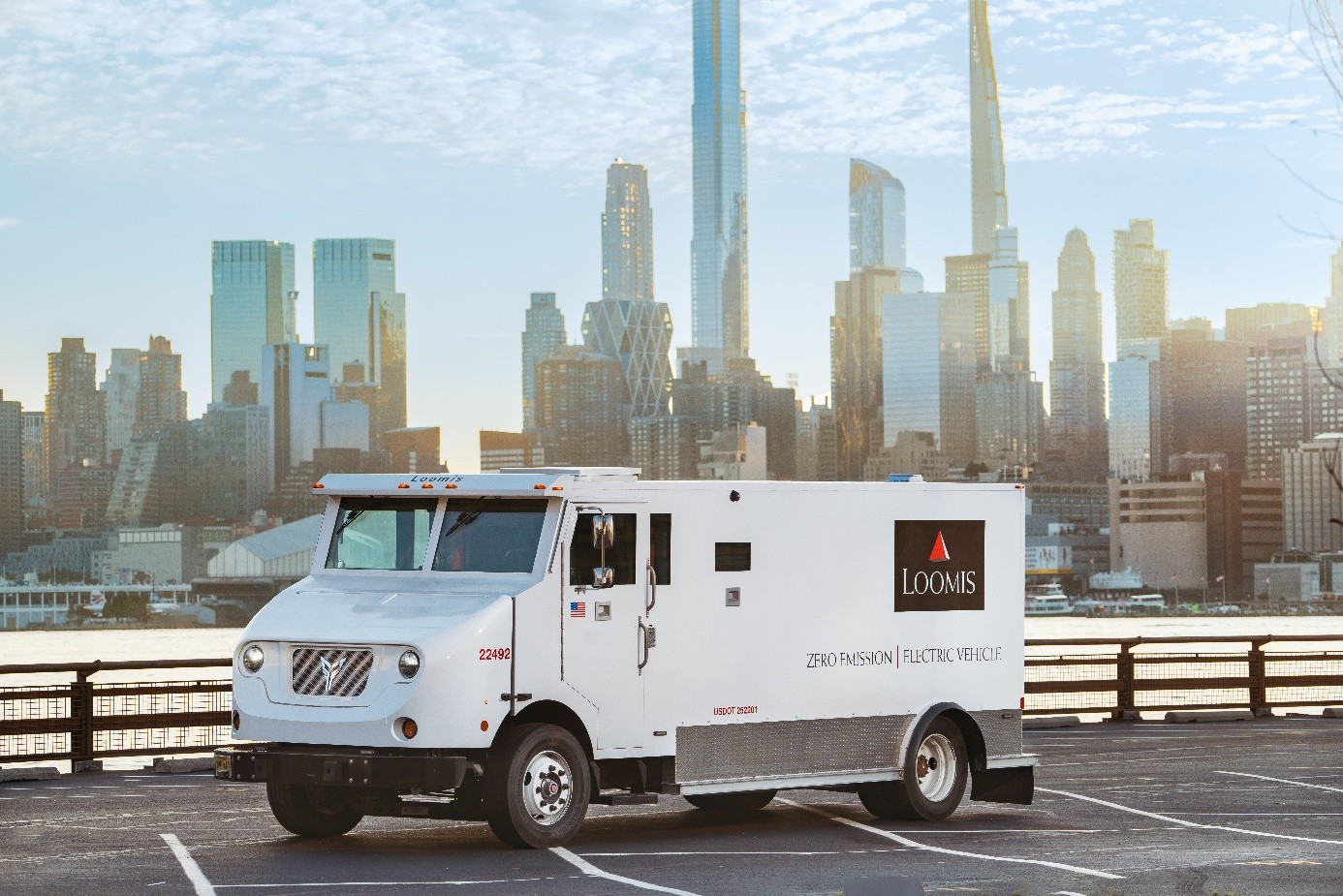
Loomis continues to expand globally, which also opens up new opportunities to drive wider impact. Although new corporate acquisitions may increase the Group's total emissions in the short term, the company views expansion as a way to drive transformation across the entire industry.
"Our growth strategy means that when we acquire a new company, we also bring more parts of the industry under our sustainability framework and our ambitious SBTi targets. By gradually integrating new operations into our agenda, we are slowly but surely helping to make an increasingly large part of our industry sustainably viable for the long term," says Jia Finnman.

This methodical climate work extends beyond the roads. Today, more than 60 percent of the electricity used in cash processing centers across Europe is generated from renewable energy.
A clear example of this development is the new branch in Bordeaux. This facility is powered entirely by 100 percent renewable electricity from its own solar panels, HVO-powered vehicles, and a water recycling system.
"At the end of the day, sustainability cannot be separated from our business strategy, it is a part of how we create long-term value and resilience. By reducing our climate impact while maintaining the highest standards of security and reliability, we are showing that sustainability can be leveraged to meet customer expectation, build foundation for higher employee performance and increase stakeholder trust, concludes Jia Finnman.